
How to Know If Your Brand Positioning Is Working
You’ve written the tagline, polished the logo, and told the world what makes your brand different. But is any of it landing? Brand positioning is the place your brand holds in your customers’ minds, and unlike a sales figure, it doesn’t show up on a dashboard. That makes it easy to assume it’s working when it isn’t.
The good news is that positioning leaves clues. If you know where to look, you can tell whether your brand owns a clear space in the market or is getting lost in a crowd of similar-sounding competitors.
What Brand Positioning Actually Is
Brand positioning is the answer to a simple question: when your ideal customer thinks about your category, why should they think of you? It covers who you serve, what you stand for, and why you are the better or different choice.
Strong positioning is specific. “Quality products at affordable prices” describes almost every brand in Lagos. “The trusted relief for everyday coughs, in language Nigerians actually use” is a position someone can remember.
7 Signs Your Brand Positioning Is Working
- People describe you the way you want to be described: Ask customers, in their own words, what your brand is known for. If their answers match your intended message, your positioning has landed. If every customer says something different, it hasn’t.
- You win on more than price: When customers choose you without needing a discount, your positioning is giving them a reason to prefer you. If you only win by being cheapest, you have a price, not a position.
- Your sales conversations get easier: Prospects arrive already understanding what you do and who you are for. Fewer people ask “so what makes you different?” and more ask “how do we get started?”
- You attract the right customers: Good positioning repels as well as attracts. If your enquiries increasingly come from the audience you built the brand for, it is working. A flood of poorly matched leads is a warning sign.
- Your brand is remembered without prompting: Unaided recall is one of the strongest signals. When people name your brand before you are mentioned, you have earned a place in their minds.
- Your message is consistent everywhere: Your website, social media, packaging, adverts, and the way your team talks about the business all tell the same story. Inconsistency dilutes positioning faster than almost anything else.
- Customers recommend you for a specific reason: “They are great” is nice. “They are the ones to call when you need X” is positioning at work. Specific referrals show that people understand what you stand for.
How to Measure It
Positioning feels abstract, but you can track it. Combine a few of these methods rather than relying on one.
- Customer surveys and interviews: Ask what words come to mind when they think of your brand, why they chose you, and who they see as your closest alternative.
- Brand awareness and recall: Track how many people in your target audience know your brand unprompted and with a prompt, and watch the trend over time.
- Social listening and comments: Read how people talk about you online. Look at the language they use, not just the sentiment.
- Website and search behaviour: Growth in branded searches (people typing your name) and direct visits suggests growing recognition.
- Sales and enquiry quality: Look at conversion rates, average order value, and how often prospects ask about price first.
- Competitor comparison: Check whether customers can tell you apart from competitors. If they cannot, your positioning is not distinct enough.
Red Flags That Your Positioning Needs Work
- Customers and team members describe the brand in very different ways.
- You compete mainly on price and discounts.
- Your messaging sounds like every other brand in your category.
- Your marketing changes direction every few months.
- You attract many enquiries, but few are the right fit.
- People recognise your logo but cannot say what you stand for.
A Real Example: Repositioning Medik-55
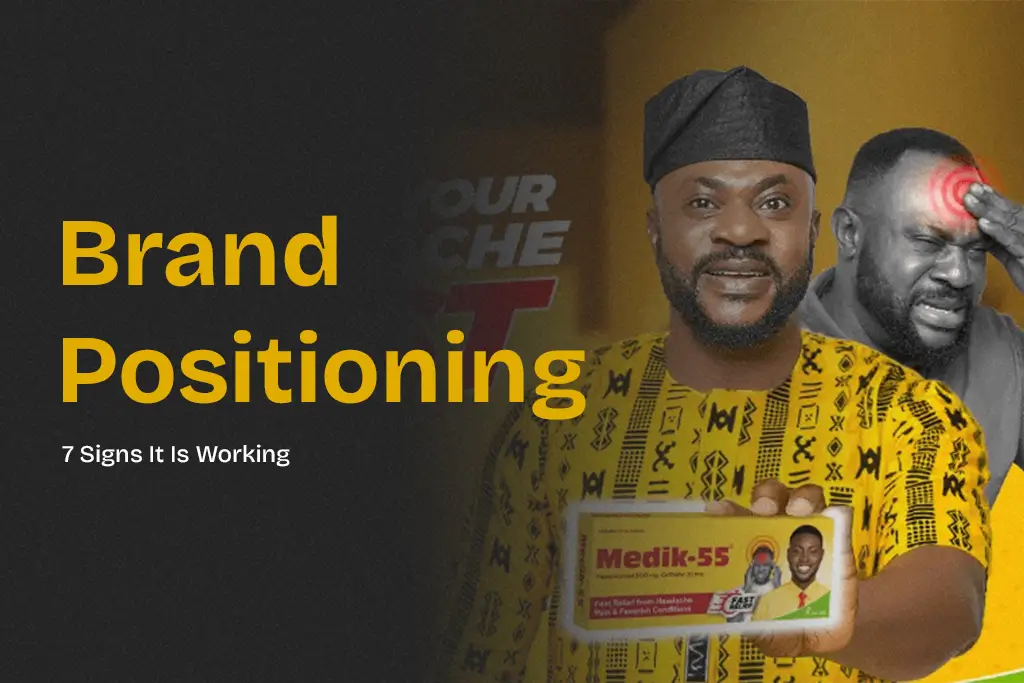
When Medik-55 needed to compete more effectively in its category, it faced a familiar problem: the brand required a refreshed identity and stronger market visibility. The objective was to reposition the brand through a comprehensive brand transformation and awareness campaign.
Adway Africa delivered a digital amplification campaign, all supported by social media management. Brand ambassador Odunlade Adekola voiced a radio jingle and led a digital commercial, while brand placements in movies on Omoni Oboli TV put Medik-55 inside entertainment its audience already enjoys. The full story is in our Medik-55 brand refresh case study.
The results were improved brand visibility, stronger cultural relevance, and better consumer recall. Those are the same signals described earlier in this article: recall shows the brand is being remembered, and cultural relevance shows the message fits the people it is meant for.
The lesson is that repositioning is rarely about a single ad. It works when identity, message, and the places your audience actually spends time all reinforce the same idea.
What to Do If It Is Not Working
Weak positioning is fixable. Start with these steps:
- Get clear on your audience: Define who you are really for. Trying to appeal to everyone usually means standing out to no one.
- Study your competitors honestly: Map what they claim and find the space they are not occupying.
- Find your real point of difference: It should be true, relevant to customers, and hard for competitors to copy. A clear marketing strategy starts here.
- Say it simply and consistently: Turn your position into a clear message and use it across every channel and touchpoint. Strong brand storytelling helps people remember it.
- Test, listen, and refine: Revisit your measures every quarter. Positioning is not a one-off exercise, because markets and customer expectations keep moving.
Positioning also shapes the rest of your marketing. If you are weighing up where to invest next, our guide on Advertising Agency vs Marketing Agency: What Does Your Business Need?, our breakdown of Social Media Marketing Strategies: What Makes Them Work?, what to expect from paid advertising, and the story of how Procold won over younger Nigerians show how strategy and execution fit together.
Make Your Positioning Work Harder
Brand positioning is working when customers can say clearly who you are, why you are different, and why they should choose you, and when that clarity shows up in your sales, your enquiries, and the way people talk about you. If those signs are missing, it is better to find out now than after another year of marketing spend.
At Adway Africa, we help brands across Nigeria and the wider continent build positioning that is clear, culturally relevant, and tied to measurable growth.
Explore our services or see more of our work.
Not sure whether your positioning is doing its job?
Book a Free Discovery Call and let’s talk.